
Breaking the 80-Year 'No-Union' Myth: Struggle of Samsung Electronics Service Workers
While documenting the tragic and systemic union-busting efforts of the 'Samsung Republic,' this text highlights how subcontracted repair workers overcame structural invisibility to spark a domino effect of labor unionization in South Korea.
2025년 12월 05일This article is a transcription of a keynote speech given at the East Asia Labor Movement Exchange held in Tokyo, Japan in October 2025.
Korea is a country so strongly influenced by Samsung's capital that it is often referred to as the Samsung Republic. Although the extent is less as of 2025, Samsung's capital is still the most influential conglomerate in Korea. Various companies controlled by the Samsung family are present in almost all industrial sectors, and Samsung's power is so strong that it influenced the legislative, judicial, and executive branches of the Korean state. At one time, President Roh Moo-hyun even admitted that Samsung's power is stronger than that of the government.
Samsung maintained a no-union policy for 80 years. Whenever workers working at Samsung tried to form a labor union, the company made every attempt to destroy the union by kidnapping, surveillance, threats, or bribery. In 2012, when the company’s labor-management strategy documents were exposed, it clearly revealed how Samsung prepared meticulously detailed strategies to maintain the no-union policy and destroy labor unions.
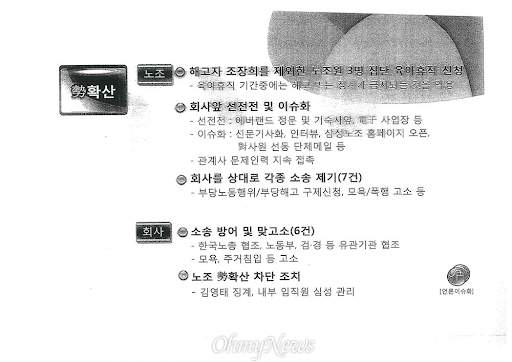
Samsung’s union-busting document dictates the method of union destruction(below) :
- Collect conversations through shadowing and surveillance of all union members and potential union members.
- Collect personal information that could influence union withdrawal, including relationships with acquaintances, personal corruption, trial progress, financial status (including debt), holiday activities with family, and health information for the individual and their family. Daily reporting is conducted.
- Disciplinary action and dismissal of ringleaders and active participants.
- Use of blacklists to prevent re-employment.
- Repeated prosecution and indictment.
- Arrests through police investigation strategy consultation.
- Delaying collective bargaining through the Korea Employers Federation (KEF).
- Aggressive lockouts and inducement of closures of partner companies.
- Targeted audits of workers active in union activities.
- Coaxing and threatening "greening" (= secede from the union).
- Neutralizing strikes.
The company I want to focus on, Samsung Electronics Service, is a wholly-owned subsidiary of Samsung Electronics. The workers of Samsung Electronics Service were not the employees of Samsung Electronics Service, but repair technicians working for the more than a hundred subcontracting companies that Samsung Electronics Service had unlawfully maintained.
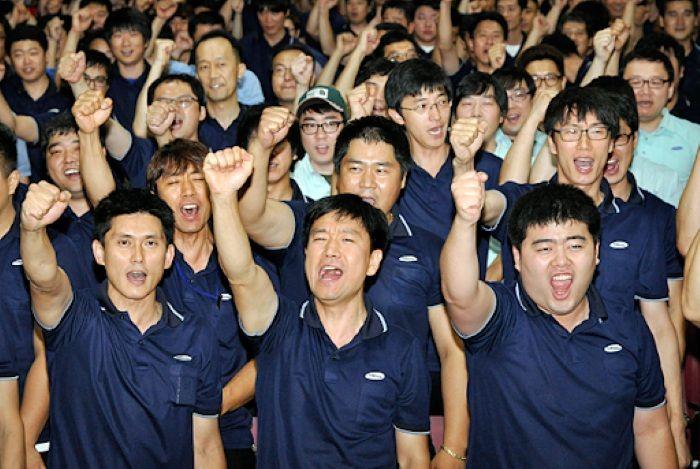
They worked at 170 service centers across the country, wearing clothes with the Samsung Electronics logo, and repaired Samsung Electronics products. Starting from Galaxy phones, these workers repaired all products made by Samsung. Korean consumers have become very accustomed to the very fast and specialized repair service maintained by Samsung and LG, so if a repair is delayed even by a day, customers may become upset. The Samsung Electronics Service workers had to endure the emotional labor resulting from that anger, and also faced pressure from the company. At that time, Samsung Electronics Service repair workers worked 15 hours a day, and it was very common to work 80 hours a week.
In 2013, about a thousand Samsung Electronics Service repair technicians joined a labor union. They were considering which union federation to join, and after hearing rumors that the Korean Metalworkers' Union (KMWU) was tough and fought hard, they decided to join the KMWU. This Samsung Electronics Service repair technicians’ union was the first in Samsung's 80-year history to have more than a thousand members. From the perspective of Korea's democratic labor unions and the Korean labor movement, this union had to succeed.
In the early days of the labor union, several workers lost their lives. It shows how harsh Samsung's workplace was. Shortly after establishing the union, a service technician died from a cerebral hemorrhage while on his way to work. This worker was working extremely harshly, for 80 hours a week.
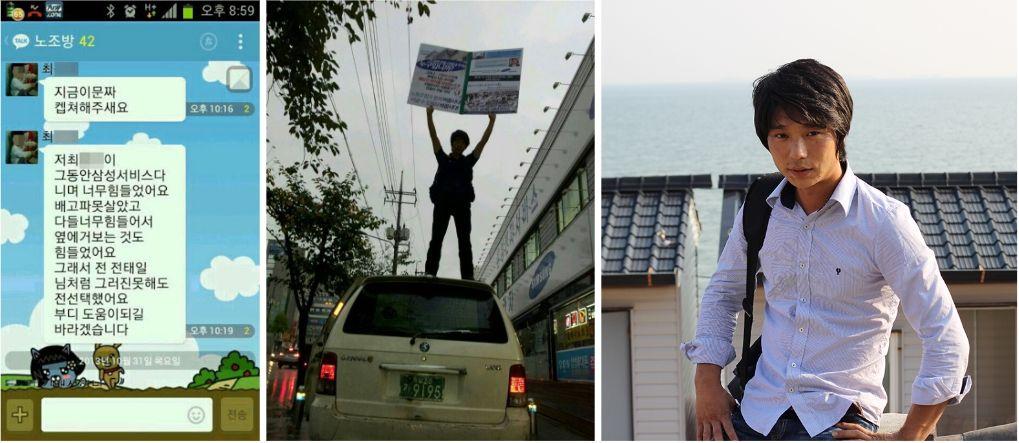
And at the end of October 2013, a 32-year-old worker CHOI Jong-beom took his own life. This worker left a will citing the Korean martyr JEON Tae-il, and explaining that his death was to resist union oppression.
The labor union had to start the struggle immediately. At the time, Samsung's refusal to negotiate prevented the workers from legally securing the right to strike. They had to take a somewhat indirect approach and conduct the strike throughout the winter. Among the union members spread across about 50 centers, the union leaders stopped working illegally and rested, gathering in front of the Samsung Group headquarters in Gangnam, Seoul, where they camped out all winter to continue the struggle. Through that struggle, they achieved a small victory against Samsung.
Samsung promised only a few things. They would not suppress the labor union, and they would provide company vehicles to the repair technicians. They would also give some bonuses. These were very minor results.
Moreover, these promises were not directly granted by Samsung itself, but were commitments made in negotiations by the Korea Employers Federation, a coalition of Korean capitalists, so in fact, it cannot be said that there were any direct negotiations with Samsung.
While making meticulous preparations, we went on a warning strike in February of the following year. The "warning strike" tactic, commonly used in the Korean labor movement, has two distinct characteristics. It serves as a tactical lever, demonstrating workers' unity and readiness to fight against capital. It also serves as a sort of rehearsal for a general strike, boosting workers' solidarity. A warning strike is also an actual strike, but it can be used as a step-by-step tactic in that the level of struggle is gradually increased. This warning strike involved union members nationwide to test how committed they were to striking, while we continuously educate workers, and persistently listened to their demands.
Through this process, a set of demands was formulated, and based on these demands, a nationwide strike took place simultaneously in multiple locations. At the same time, the union's concern was that most of the Samsung Electronics service repair workers were young laborers and were not familiar with the various struggle methods traditionally used by the KMWU.
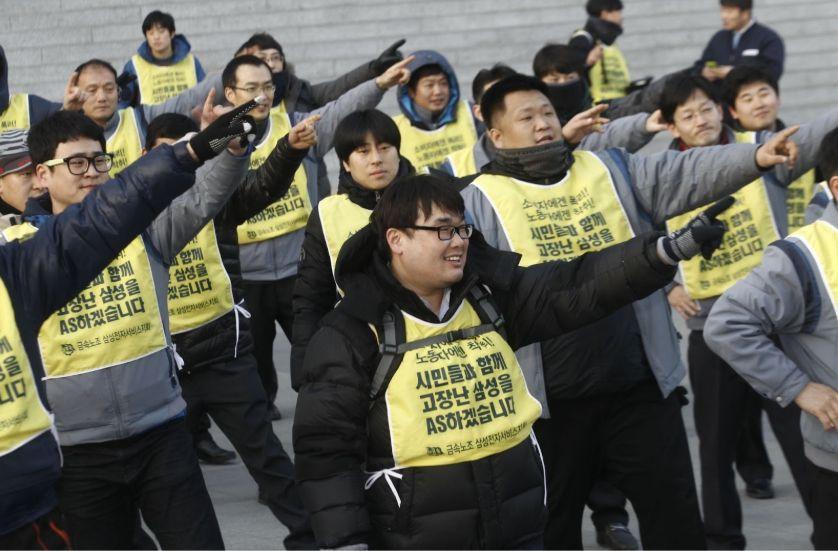
So I thought that the warning strike should be done in a new way. In the case of Seoul, the warning strike lasted for 4 days. On the first day, we created a dance to support the struggle. We learned the dance together, and designated the day as a rhythmic movement day to learn and dance together as part of the strike program.
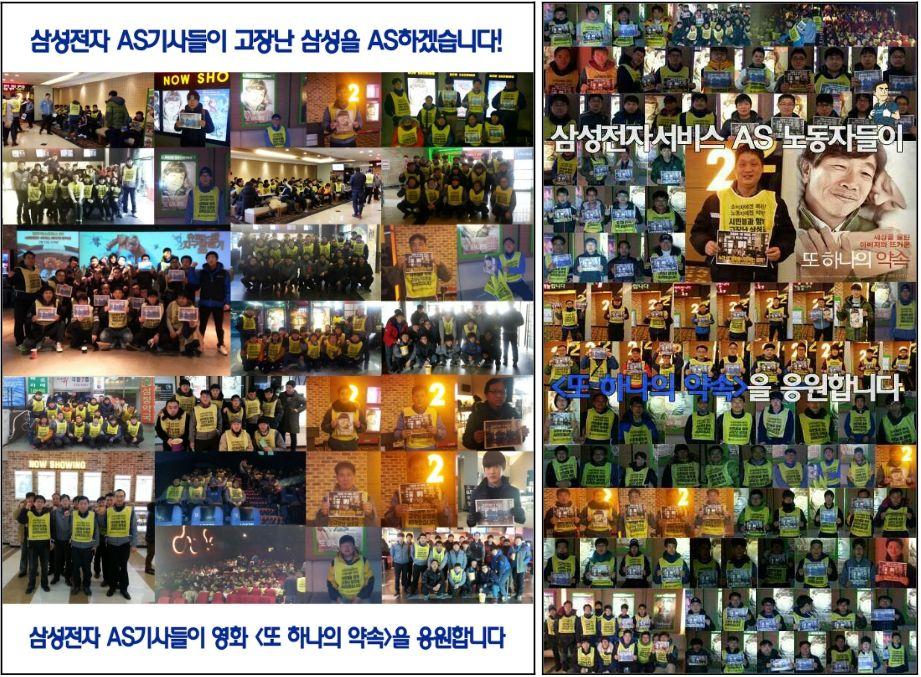
The strike's second day was designated as a movie day. Around that time, a film called "Another Promise" was released. This film is a fictional story that exposed the industrial accidents at Samsung Electronics' semiconductor factory. We organized a program to go to the cinema together to watch this movie. Press conferences denouncing the exploitation at Samsung Electronics factories were held nationwide simultaneously.
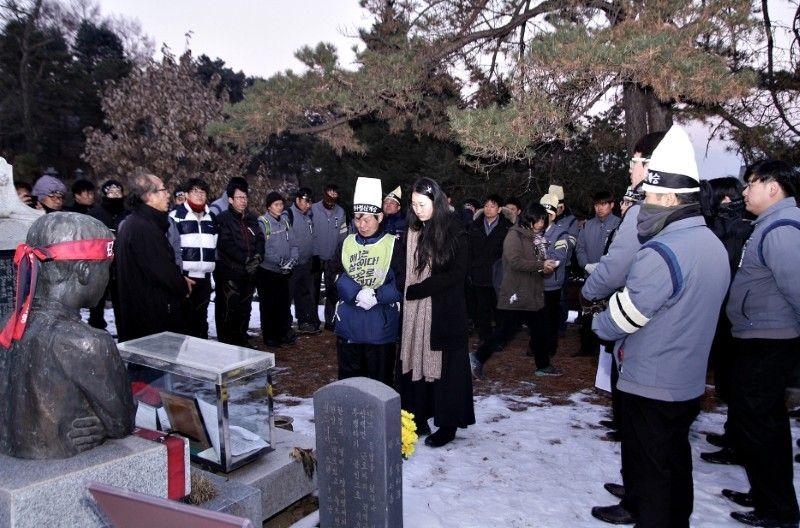
On the third day, we paid tribute together to a colleague who had lost his life a few months ago and vowed that we would fulfill that colleague's promise bywinning the demands with the strike. By conducting the warning strike, members could believe in the capacity and will of each other to go on strike simultaneously nationwide.
I would like to highlight the preparation process needed for organizing the strike. First, we continuously educated union members on a daily basis and held regular discussions. We discussed what our demands should be and what complaints existed in the workplace. Then, we gathered these complaints and debated why we had to fight.
This continued for several months. We made a weekly union newsletter. Each week, we produced one issue of the union newsletter, reporting on how the negotiations were progressing, and how some centers were fighting over certain issues, since the centers were dispersed all over the country in more than 50 locations. When the negotiations completely broke down, we intended to go through union membership votes to secure legal strike rights. This procedure is required under Korean labor union law.. Only when the majority of members vote in favor can the union gain the legal right to strike.
Only by doing this can workers who have never experienced a strike can garner the will to strike and refuse to go to work. And at the same time, we didn't just gather support within the company but continuously ran social campaigns. We met ordinary people in each and every Samsung Electronics Service center, sharing our concerns, and also went to the streets to inform citizens what our issues were. We thought that the public support gathered through such campaigns could exert pressure on Samsung capital throughout society. Our existing narrative strategy relied on the narrative that poor workers were suffering due to Samsung's anti-union policy, and that only by changing this could Korean society at large change. Therefore, we had to appeal to citizens to join this movement. In doing so, we gradually raised the level of struggle, picketing inside the service centers, holding placards, staging silent protests, and using tactics to increase the intensity of the struggle. Striking was not just about stopping our work; through this process, workers showed our unity to the management and to society. It was a process in which the workers themselves could recognize the purpose of the struggle.
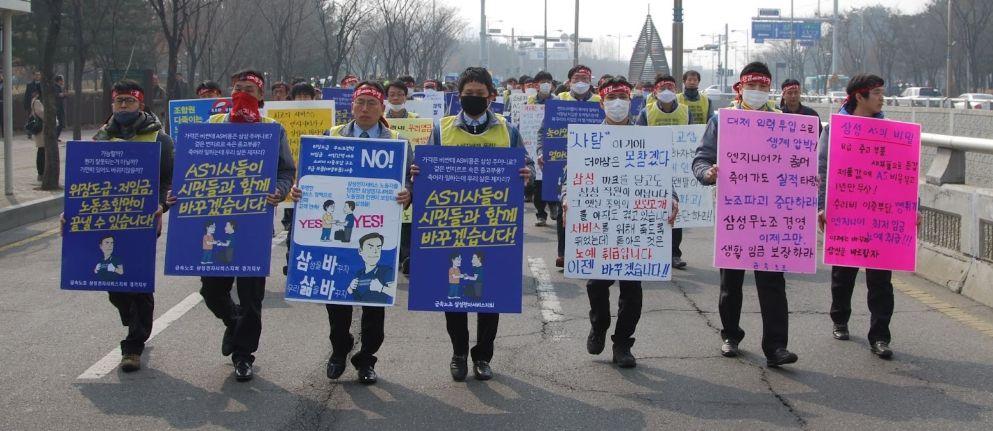
As we moved into March, we had developed schedules for simultaneous nationwide protests. Samsung's headquarters is located in Suwon, South Korea. Suwon is a city near Seoul with a population of about one million and hosts many Samsung factories and the HQ building. In front of the headquarters, over a thousand people gathered for an intense rally, and for the first time, in this city where about 100,000 Samsung workers are employed, they held a street march and rally, raising the intensity of the struggle.
Because of this, Samsung closed down the three service centers with the highest organizational power. More than a hundred workers lost their jobs overnight. These workers, though surprised by the sudden loss of employment, organized a delegation to the struggle. They went to Seoul in two teams of 50 people each, spending a week at a time, sleeping at the KMWU’s meeting room, and seizing many opportunities to fight across Seoul.
They conducted surprise protests at locations owned by Samsung - art galleries,professional baseball games, universities, stores selling Samsung Galaxy smartphones - and staged protests throughout the city, utilizing a wide range of methods.
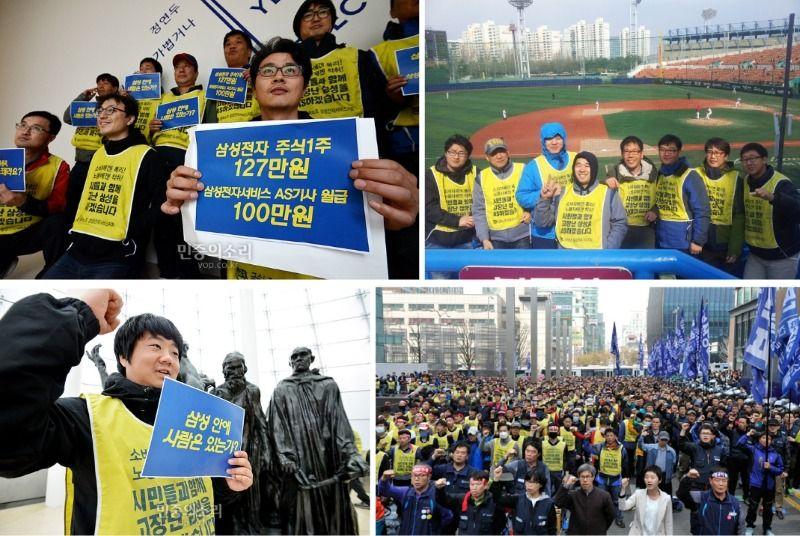
Samsung had to consider reinstating these 100 workers, if only to prevent them from freely moving about and campaigning. Furthermore, the three service centers where these workers worked (Haeundae in Busan, Asan in South Chungcheong Province, and Icheon in Gyeonggi Province) were all located in major city centers, making a complete closure impossible. It was clear that these closures and layoffs were temporary and intended to suppress the union, and for this reason, the union spared no effort in supporting the laid-off workers.
Meanwhile, the oppression continued to worsen. On May 16, YEOM Ho-seok, one of the union leaders, took his own life, leaving a note describing the hardship of life and the pain from union repression. His death revealed the harsh and devastating reality produced by Samsung’s corporate culture. After his death, we immediately brought his body to Seoul Medical Center and set up a mourning altar in the funeral hall. There, members began to discuss how to continue their struggle. But on the evening of May 17, around 6 p.m., the police suddenly stormed the funeral hall with three hundred police personnel and seized the body by force. It was an unthinkable and shocking event. It was hard to believe such a thing could happen again in Korea. We had no choice but to start the general strike the next day, even though we weren’t prepared yet.
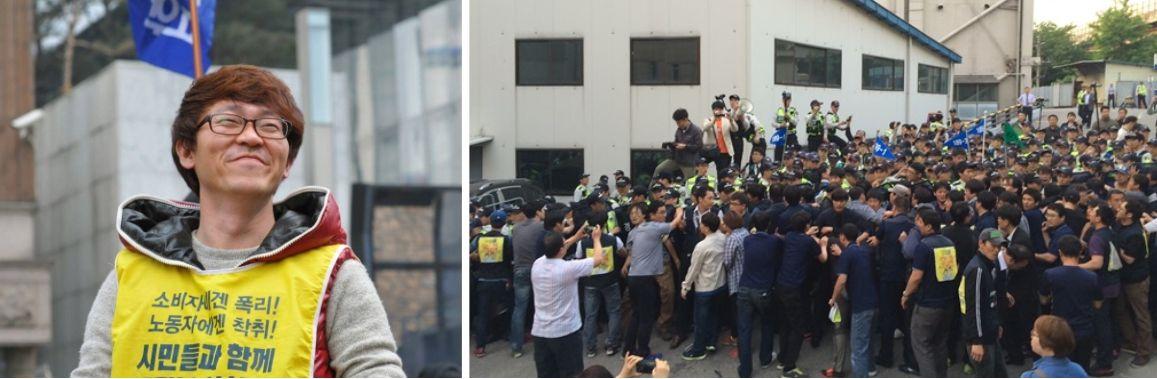
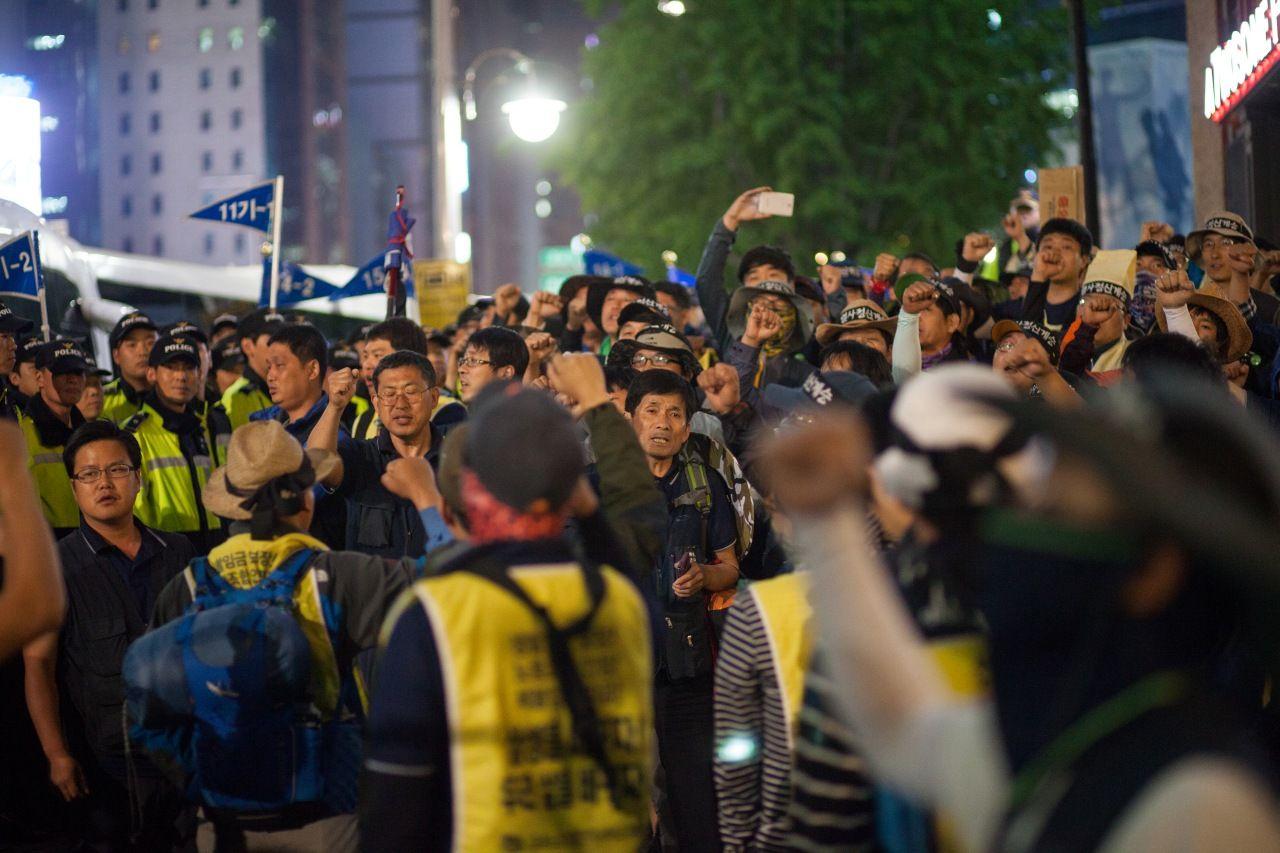
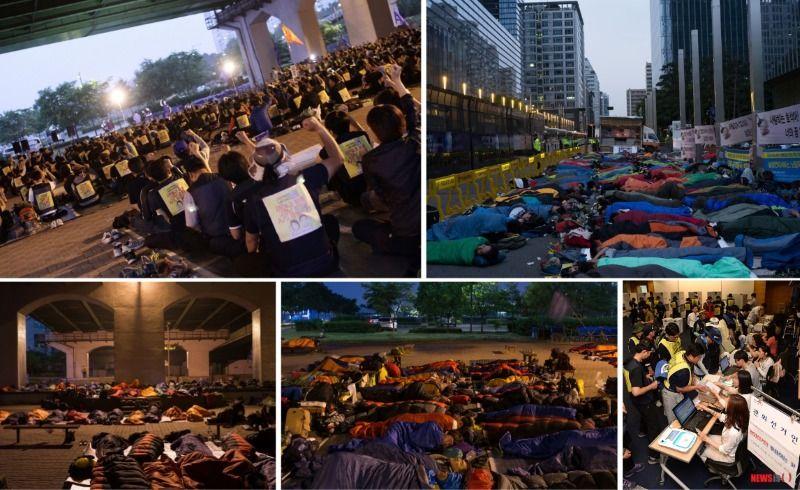
The next day, we declared an indefinite general strike and ordered all members to gather in Seoul. One thousand workers stopped work and headed to Seoul. From Monday to Saturday, they spent their days continuously protesting, holding an outdoor sit-in and sleeping on the streets in front of Samsung Group’s headquarters.
Most of the workers did not live in Seoul — they came from southern cities such as Busan, Changwon, and Asan. For 50 days, they didn’t go home, sleeping in sleeping bags on the streets right in front of Samsung Group’s headquarters in Gangnam. When it rained, they slept under a bridge by the Han River. On Sundays, they played baduk (Go), futsal, or flew kites together.
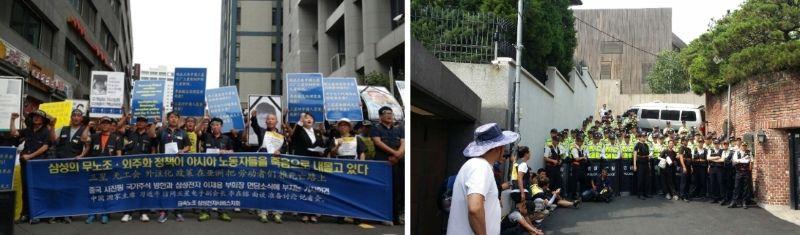
Maintaining the strike was very important. If the same struggle continued with the same slogans, the workers might find it boring or lose morale. Therefore, we always thought about how to keep this struggle inspiring for the workers. We tried to deploy different tactics every day during the 50 days. Rather than holding the same rallies, we went to different places daily, including in front of the Chinese Embassy. The Chinese Embassy was targeted because President Xi Jinping was coming to South Korea to meet Samsung Group Vice Chairman Lee Jae-yong.
Workers created podcasts to broadcast every week. On the voting day for simultaneous local elections across the country(4th June, 2014), journalists came to the polling station where union members wore vests and voted together. We held a dance party at Marronnier Park to inform citizens that these workers were continuing their struggle.
Moreover, we tried to gain social support. We held press conferences, met with university students, and wrote letters to about 200 prominent figures in society; each letter was personally written by a worker. We put a lot of thought into ensuring that workers themselves recognized the story behind our struggle and could take pride in having a unique story. Eventually, this struggle came to an end after about 50 days.
I believe that a single strike cannot change everything. There is a saying that it is more important how you retreat in an orderly manner than how you advance. This was a matter for us to ponder upon. Honestly, I don't think this struggle was successful. There are many aspects to reflect on and it left many wounds on the workers. Workers lost their lives, and there were many conflicts among the union leaders. I believe that truly overcoming these conflicts through the struggle and moving towards strengthening unity is the real path to victory, and in that regard, there were certainly shortcomings.
While education and discussion sessions for union members were held frequently, there were also many disagreements, for example between the workers repairing cell phones and workers repairing washing machines. It seems clear that overcoming such issues was a very difficult challenge. A few years later, the collective agreement was won, but there were very weak parts.
The early strikes of the Samsung Electronics Service Union eventually led to the signing of a collective bargaining agreement. By 2018, the union had also won a promise from Samsung Group to grant regular employment status and officially recognize the union. Since then, more and more labor unions have been formed within Samsung. The company’s long-held “no-union myth” was finally put to an end.
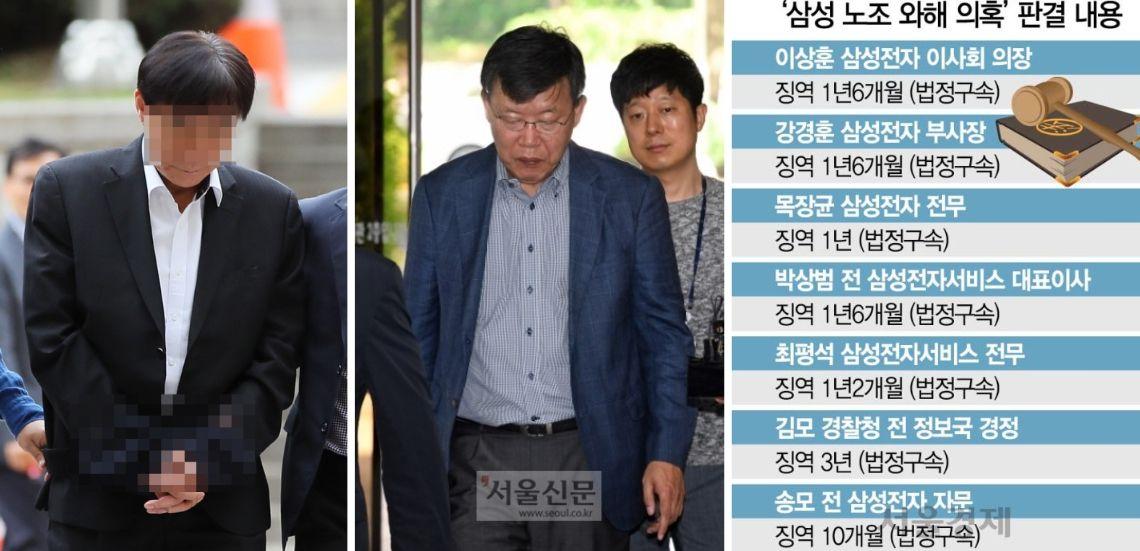
A few years later, by nothing short of a miracle, documents related to Samsung's policy of destroying labor unions were discovered. Thanks to the accidental discovery of these documents, amounting to about 7,000 pages, seven people, including the president of Samsung Electronics Service and police officers, were arrested. Vice Chairman Lee Jae-yong promised to acknowledge the Samsung Electronics Service union and make the workers permanent employees.
This struggle was won by interacting with the struggle of Samsung Electronics Service Repairman Workers' Union. And when a union was formed at Samsung Electronics Service, sales workers from Samsung Electronics and LG Electronics Repair Workers' Union workers tried to form a union. A labor union was formed at a subscription-based home appliance rental service company run by LG Electronics; most of the workers there are women. When Samsung announced in 2018 that it would end its no-union policy, labor unions affiliated with Samsung Group were formed everywhere. For example, workers at Samsung Electronics' big plants unionized, and tens of thousands of workers joined.
On the surface, it ended as a tremendous victory. But there were many wounds. Two workers took their own lives. There were many conflicts. Among them, during the negotiation process with the employer union federation, the Federation of Korean Industries, we had to make a judgment on a negotiation proposal presented by Samsung, but when making this judgment, a senior union leader with extensive experience conducted the negotiation in secret, accepting the proposal and ending the negotiation. It was not a retreat made with the consent of the workers from below, but rather, by a secret negotiation. Not all union members agreed with the outcome of the negotiation.
I believe retreat tactics are just as important as advances in a workers' strike because ultimately, our struggle must move toward greater unity and organization. Furthermore, all union negotiations must be based on the broad understanding and agreement of union members. Only then can we unite in both rejection or support of the agreement. Even if negotiations break down or drag on, workers' unity allow for the struggle to continue.
The 2014 Samsung Electronics Service Union struggle had its shortcomings. This taught me a painful lesson, and I believe most workers will share the same sentiment. As the strike dragged on, many workers struggled to make a living while continuing the strike. And in the process of forging this difficult agreement, I realized that education and discussion, fostering democracy and consensus from below, were more important than the charisma of a leader.
Although the small victory of the Samsung Electronics Service workers was marred by trauma, the fact that it created this domino effect holds historical significance. In any labor struggle, there is no complete victory or defeat. Whether it becomes a victory or a defeat depends on how we remember and continue that struggle.
글: 홍명교(HONG, Myungkyo)
교정·교열: Kevin Lin, 보리(Bori)